Finalrentals Blog

Published in Driving Category.
Driving in Bulgaria offers an unparalleled opportunity to explore the diverse landscapes of the Balkan Peninsula, from the sun-drenched Black Sea coast to the rugged, snow-capped peaks of the Rila and Pirin mountains. However, navigating the roads in this country requires more than just a map. It demands an understanding of a complex legal framework and a distinctive local driving culture.
For many travellers, mastering the driving rules in Bulgaria is the key to a safe and stress-free journey. This guide provides a comprehensive overview of everything you need to know about driving in Bulgaria, ensuring you remain compliant with the law while confidently handling the nuances of Bulgarian traffic.
The Local Driving Requirements
Before you begin your journey, you must ensure that both you and your vehicle meet the basic legal criteria for driving in Bulgaria. The requirements are relatively straightforward, but there are specific details that can catch you off guard if you are not prepared.
Age Restrictions
In Bulgaria, the legal driving age is 18. However, if you intend to rent a vehicle, most agencies set their own minimum age at 21 or 25, often applying a Young Driver Surcharge, a daily fee added to the base rate, to those who fall within this age bracket. Some companies also have a maximum age limit, usually set at 70 years old. Aside from a surcharge, senior drivers may be required to submit additional documentation, such as a recent medical certificate. Additionally, young and old drivers may be restricted in renting certain vehicle models.
Driver Documents
To drive in Bulgaria, you must carry a valid driving licence at all times. While licences issued by EU and EEA member states are fully recognised, travellers from other countries, including the United Kingdom post-Brexit, are strongly advised to carry an International Driving Permit (IDP) alongside their original licence. This document serves as an official translation and is frequently requested during routine police checks. You must also always have your passport or national ID card.
Vehicle Paperwork
In addition to your personal documents, you also need to have the vehicle’s registration and proof of third-party liability insurance. If you are driving a car that is not registered in your name, such as a hired car, you must have the rental contract or a notarised letter of authorisation, preferably translated into Bulgarian. With Bulgaria's full integration into the Schengen Area and the adoption of the Euro, documentation checks at internal borders have decreased, but the legal requirement to carry these physical documents remains absolute for any roadside inspection.
Safety Equipment
Bulgarian law is very specific about the equipment that must be present in every vehicle. You are required to have a first-aid kit, a warning triangle, a fire extinguisher with a valid inspection sticker, and a reflective safety vest. The safety vest must be kept within the cabin of the car, not in the boot, as you are required to wear it the moment you step out of the vehicle on a motorway or rural road in the event of a breakdown or accident.
From November 15 to March 1, all vehicles are mandated to have winter tyres, with a minimum 4mm tread. You should also have snow chains on board. The safety and winter equipment are usually provided by the rental agency, but it is your responsibility to confirm their availability before leaving the lot.
The Official Driving Regulations
The driving rules in Bulgaria are strictly implemented to promote safety on the road. The most basic law to remember is driving on the right-hand side of the road, which is familiar to most travellers. Adhering to the official regulations is also essential for avoiding penalties.
Speed Limits
The speed limits in Bulgaria are generally consistent with European standards, but are monitored more aggressively via new average speed detection systems. In urban areas, the limit is 50 km/h. Outside of built-up areas, the limit is 90 km/h. On expressways, you may travel at 120 km/h, while on motorways, the maximum limit is 140 km/h, though signage often reduces this to 130 km/h on older segments.
Daytime Lights
In Bulgaria, one of the most important regulations is to switch on the headlights or daytime running lights 24 hours a day, all year-round, regardless of time or weather conditions. This is particularly essential during the winter season, especially when travelling through mountainous regions. Failure to keep the lights on can result in heavy fines.
Safety Protocols
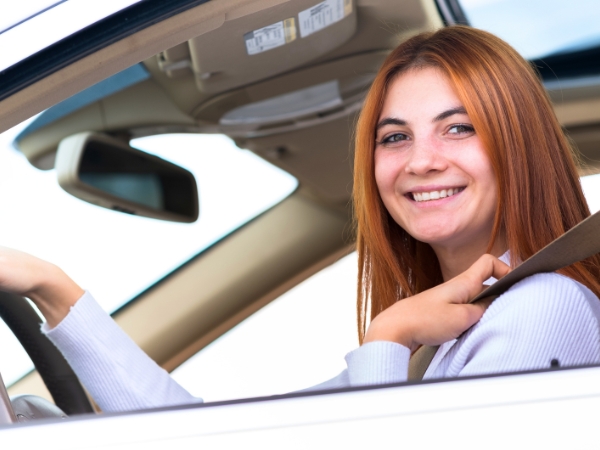
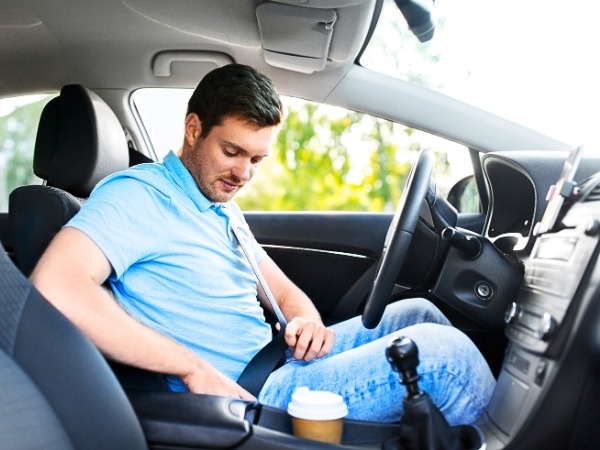
Safety is the main priority on the road. The use of seatbelts is mandatory for all occupants of a vehicle, whether seated in the front or the rear. Failure to comply can result in fines for both the driver and the unbelted passenger, and police frequently conduct spot checks on major transit routes.
Furthermore, any child under 150 cm in height or weighing less than 36 kg must be secured in a child restraint system, such as a car seat or booster, appropriate for their size. While children are permitted in the front seat if they are in an appropriate restraint, rear-facing seats are only allowed if the passenger airbag is fully deactivated.
Strict Prohibitions
Bulgaria operates a strict policy regarding drunk driving. The legal blood alcohol content (BAC) limit is 0.5‰. For novice drivers with less than two years of experience, a strict zero-tolerance policy applies. The penalties for being over the limit include immediate licence suspension and heavy fines.
Furthermore, the use of any mobile device while driving is strictly prohibited unless it is handled through a hands-free system integrated into the vehicle. Sudden braking without an emergency cause is also technically a punishable offence to encourage smoother traffic flow and prevent rear-end collisions.
E-Vignette System
Another critical factor is the electronic vignette system. Bulgaria does not use traditional toll booths on its motorways. Instead, any vehicle travelling on national roads outside of city limits must have a valid e-vignette. Prices for a standard passenger car include a weekend vignette for approximately 10 BGN and a weekly version for 15 BGN. A new one-day vignette is also available for those just passing through. Failure to possess a valid vignette is detected by a network of over 300 overhead cameras and results in a compensatory fine of roughly 70 BGN to 300 BGN, depending on the delay in payment.
The Unwritten Road Guidelines
While the official regulations provide the framework, the unwritten rules are what truly define the experience on Bulgarian roads. Understanding the local nuances will help you navigate the country with the same ease and confidence as the locals.
Local Etiquette
Bulgarian driving culture can best be described as assertive. In cities like Sofia or Plovdiv, you will find that drivers often treat lane markings as suggestions rather than strict boundaries. It is common for drivers to merge without signalling or to create extra lanes at busy junctions. On the motorways, there is a clear hierarchy based on speed. The left lane is reserved for overtaking. Defensive driving is vital. Always anticipate that the driver next to you might make a sudden move without warning.
Communication
Communication between drivers involves the use of lights. If you are in the left lane and a vehicle approaches behind you flashing its high beams, it is customary to move to the right as soon as it is safe to do so. This is not necessarily a sign of aggression, but rather a standard way of communicating the desire to pass. If a driver lets you merge, a brief double-blink of your hazard light is the standard gesture of thanks.
Road Hazards
You must be prepared for varied road conditions once you leave the main motorways. While major routes are generally good, secondary and rural roads can feature significant potholes or even wandering livestock. Locals often weave within their lane to avoid these hazards, so do not be alarmed if you see a car ahead moving erratically. Additionally, you may encounter slow-moving agricultural machinery or donkey-drawn carts in rural areas. Patience is key here, as these road users are a permanent fixture of the Bulgarian countryside.
Frequently Asked Questions on Driving Rules
To further understand the driving rules in Bulgaria, here are the answers to some of the most frequently asked questions regarding regulations in the country.
- Can I turn right on a red light in Bulgaria? Turning right on a red light is strictly forbidden unless there is a separate green arrow signal illuminated next to the red light. Doing so without this signal is treated as a major traffic violation and will result in a heavy fine.
- Who has the right of way at roundabouts? Generally, vehicles already circulating within the roundabout have priority over those attempting to enter. However, you must always look for specific priority signs, as some older junctions may still apply the "priority to the right" rule.
- How do paid parking zones work in cities? Central city areas are divided into paid zones where you must pay by sending an SMS from a local number or using a mobile app. Many city councils have replaced paper tickets with purely digital payments, so ensure your phone is set up before parking.
- Can I pay a traffic fine directly to the police officer? It is strictly prohibited to pay fines in cash to an officer on the roadside. Any official traffic violation must be settled via bank transfer or at a designated administrative payment office to avoid bribery charges.
- What should I do during an accident or breakdown? You should immediately dial 112 for the unified European emergency services or 146 for specialised Bulgarian roadside assistance. Ensure you wear your reflective vest before exiting the vehicle and place your warning triangle at least 30 metres behind the car.
Rent a Car for a Driving Adventure in Bulgaria
Driving in Bulgaria is an adventure that rewards travellers with breathtaking views and the freedom to discover remote monasteries, hidden beaches, and traditional villages. By familiarising yourself with the local driving requirements, official regulations, and road etiquette, you can navigate the country with the confidence of a local.
The infrastructure continues to improve, and with the latest updates to the traffic laws, the roads are safer and more regulated than ever before. Just remember to keep your headlights on, secure your e-vignette, and embrace the unique driving culture that makes a Bulgarian road trip so memorable.
There is no better way to experience the authentic heart of the Balkans than from the driver's seat. With the knowledge you obtained from this guide, you are ready for a driving adventure across the country. So, rent a car from Final Rentals, plan your route, and begin your Bulgarian journey today to see the beauty of the Land of Roses for yourself.